
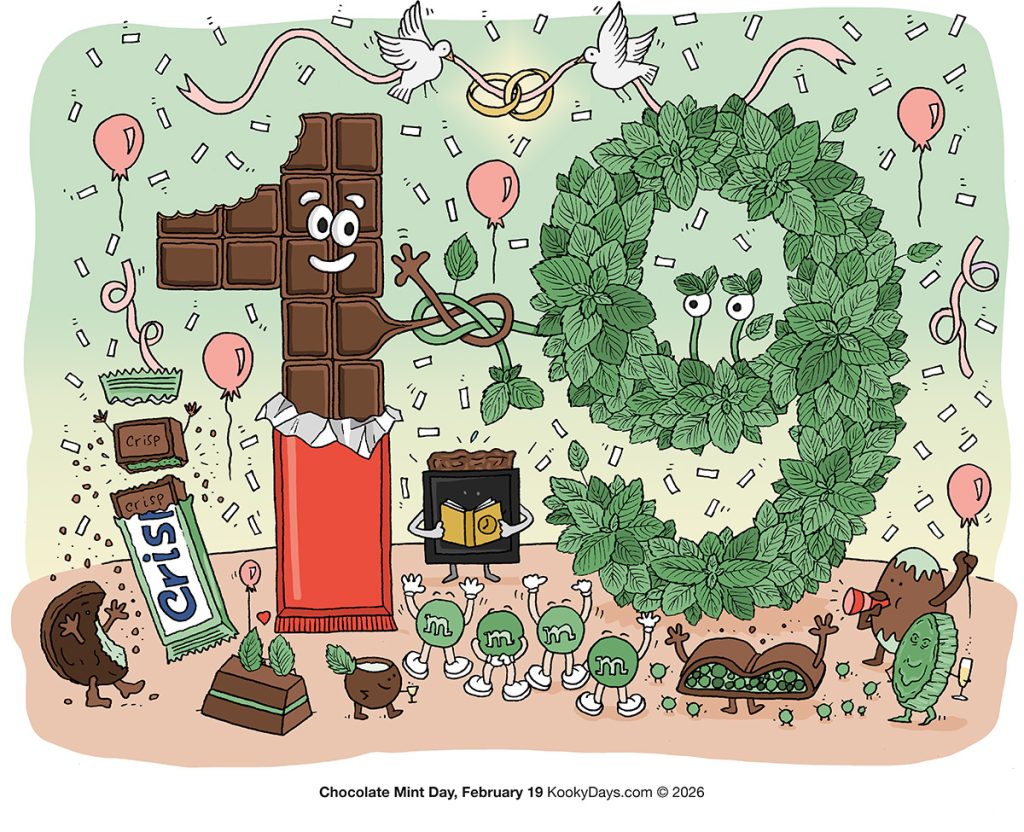
Proof that opposites attract!
Mark your calendars, because it’s time to celebrate the gloriously cool and creamy delight that is Chocolate Mint Day.
Few flavour combinations divide opinion quite like chocolate mint. You either adore its refreshing zing or insist it tastes suspiciously like toothpaste!
Yet this bold blend of rich cocoa and invigorating mint has been charming taste buds for centuries. From after-dinner chocolates to ice cream classics, chocolate mint is a flavour pairing that refuses to fade quietly into the confectionery cupboard.
So whether you’re team “minty marvel” or “minty mayhem”, this is your official excuse to indulge.
The origins of Chocolate Mint Day
Unlike centuries-old traditions such as Christmas or Easter, Chocolate Mint Day is one of those modern “food holidays” that emerged as part of the growing trend of celebrating specific treats.
Many of these days were popularised in the United States during the 20th century, often promoted by confectionery companies or enthusiast groups.
While no single inventor of Chocolate Mint Day is definitively recorded, its date (19 February) sits snugly in the middle of winter in the Northern Hemisphere, when comforting sweets are especially welcome.
The History of Chocolate Mint
The pairing itself, however, has far older roots.
- Mint has been used in cooking and medicine since ancient Egyptian, Greek and Roman times.
- Chocolate’s journey from Mesoamerica to Europe began in the 16th century.
- By the Victorian era, mint creams and fondants had become fashionable after-dinner treats in Britain.
The refreshing quality of mint makes it a natural palate cleanser, which explains why chocolate mint became so popular in post-meal confectionery.
The great chocolate mint debate
No celebration would be complete without controversy.
The biggest debate? Whether chocolate mint tastes divine or disturbingly dental.
Critics argue that mint belongs in toothpaste, not truffles. Fans counter that the cooling sensation enhances the richness of chocolate, creating balance rather than sweetness overload.
In truth, flavour perception is deeply personal and that’s part of the fun.
How to celebrate the day
Looking for fresh ideas? Here’s how to make 19 February deliciously memorable:
- Host a Chocolate Mint Tasting Party
- Compare mint chocolates, mint ice cream, brownies and peppermint bark. Score them for creaminess, intensity and balance.
- Bake Something Brilliant
- Try chocolate mint brownies or cupcakes topped with mint buttercream.
- DIY After-Dinner Mints
- Make homemade peppermint creams coated in dark chocolate.
- Office Treat Table
- Bring in minty goodies for colleagues and let them vote for their favourite.
- Mint Chocolate Movie Night
- Pair mint choc chip ice cream with a cosy film evening.
- School Science Twist
- Discuss how menthol creates that cooling sensation — delicious and educational!
You might also enjoy celebrating other chocolate-themed days on Kookydays.com, such as Chocolate Fondue Day.
The fresh minty taste!
“Mint chocolate chip is the toothpaste of ice cream.”
While this quote is not attributed to Jerry Seinfeld, it captures the entire chocolate mint controversy in one perfectly timed punchline, which feels like something he would say!
The quote plays on the unmistakable cooling sensation of mint, because most of us associate mint flavour with toothpaste and mouthwash.
Tasting it in a dessert can feel oddly… hygienic, as the brain links mint with brushing your teeth (think of cleanliness, freshness, bathrooms). Definitely not pudding bowls and waffle cones.
And, in this scene of “The Junior Mint”, it encapsulates this notion further of the distaste of mint and chocolate.
Common Types of Mint
There are dozens of mint varieties, but most fall into a few broad types based on flavour and culinary use. Here’s a detailed overview:
Peppermint (Mentha × piperita)
- Flavour: Strong, cool, slightly spicy
- Use: Candies, chocolates, peppermint oil, tea, toothpaste
- Notes: A hybrid of spearmint and watermint; widely used in mint chocolate products
Spearmint (Mentha spicata)
- Flavour: Sweet, mild, refreshing
- Use: Teas, salads, cocktails (like mojitos), cooking, desserts
- Notes: The classic “garden mint,” softer than peppermint
Chocolate Mint (Mentha × piperita f. citrata ‘Chocolate’)
- Flavour: Minty with subtle chocolate aroma
- Use: Desserts, chocolate mint tea, garnishes
- Notes: Perfect for chocolate-mint pairing — often sold as chocolate mint plants or in confections
Apple Mint (Mentha suaveolens)
- Flavour: Fruity, mild, slightly tart
- Use: Salads, jellies, drinks, desserts
- Notes: Often fuzzy-leafed; popular in culinary gardening
Pineapple Mint (Mentha suaveolens ‘Variegata’)
- Flavour: Fruity, sweet, delicate mint
- Use: Garnish, tea, cocktails
- Notes: Attractive variegated leaves; mostly ornamental and culinary
Corsican Mint (Mentha requienii)
- Flavour: Tiny leaves, very strong, cool, almost minty citrus
- Use: Essential oils, crème de menthe liqueur, ground cover in gardens
- Notes: Very small plant; one of the strongest flavour mints
Orange Mint (Mentha × piperita citrata)
- Flavour: Citrus-mint hybrid
- Use: Teas, cocktails, desserts
- Notes: Combines refreshing mint with orange undertones
Ginger Mint (Mentha × gracilis)
- Flavour: Spicy, warm mint undertone
- Use: Teas, infusions, garnishes
- Notes: Adds a warming twist to traditional mint recipes
Pennyroyal Mint (Mentha pulegium)
- Flavour: Strong, medicinal
- Use: Historically used in herbal remedies
- Notes: Toxic in large doses; not recommended for casual culinary use
Fun fact: Most “mint chocolate” products use peppermint for a strong, cooling effect, but chocolate mint (chocolate-scented spearmint) is prized for desserts where you want a gentler, sweeter mint flavour.
Famous Examples and Iconic Products
Here are some beloved chocolate mint creations that have earned cult status:
After Eight
- Creator: Rowntree’s (UK), 1962
- Description: Thin squares of dark chocolate filled with mint fondant, traditionally served after dinner.
- https://en.wikipedia.org/wiki/After_Eight
Peppermint Crisp
- Origin: South Africa, launched in the 1960s
- Description: A milk chocolate bar filled with crunchy peppermint-flavoured shards.
- https://en.wikipedia.org/wiki/Peppermint_Crisp
Mint Chocolate Chip Ice Cream
- Origin: Popularised in the United States in the 20th century
- Description: A pale green mint-flavoured ice cream with chocolate chips.
- https://en.wikipedia.org/wiki/Mint_chocolate_chip
York Peppermint Pattie
- Origin: United States, 1940
- Description: A dark chocolate-coated peppermint centre known for its strong cooling effect.
- https://en.wikipedia.org/wiki/York_Peppermint_Pattie
These classics prove that chocolate mint is more than a passing fad — it’s a confectionery institution.
Why Chocolate Mint Day matters
Chocolate Mint Day isn’t just about sweets, it’s about celebrating bold flavour combinations and embracing playful debates.
Whether you’re biting into a dark chocolate peppermint square or scooping mint chocolate chip ice cream straight from the tub, you’re participating in a small but joyful tradition.
So go on… take a bite, savour the cool swirl of cocoa and mint, and let Chocolate Mint Day refresh your February.
😀
Process
The process used to create all artwork on KookyDays.com is 100% original and is drawn, inked and coloured digitally by hand, with ♥ by Kevin Fish.
If you are interested in original artwork, contact Kevin.
References
Websites
For reference, the following websites were used to provide information about the day and that the day itself exists on the calendar.
- Time and Date – Chocolate Mint Day
- National Today – National Chocolate Mint Day
- WhatNationalDayIsIt.com – National Chocolate Mint Day
- Days of the Year – Chocolate Mint Day
- National Day Archives – National Chocolate Mint Day
AI generators
These AI tools were used to help write blog post content and provide inspiration or ideas.
- ChatGPT
- Notion AI
- Pixlr.com
Ideas board
- Image searches on Google
- Pilxr.com (collage)
Follow and tag
#chocolatemintday
#kookydays
#cartoons